Why a glaze crazes after the pot has cooled
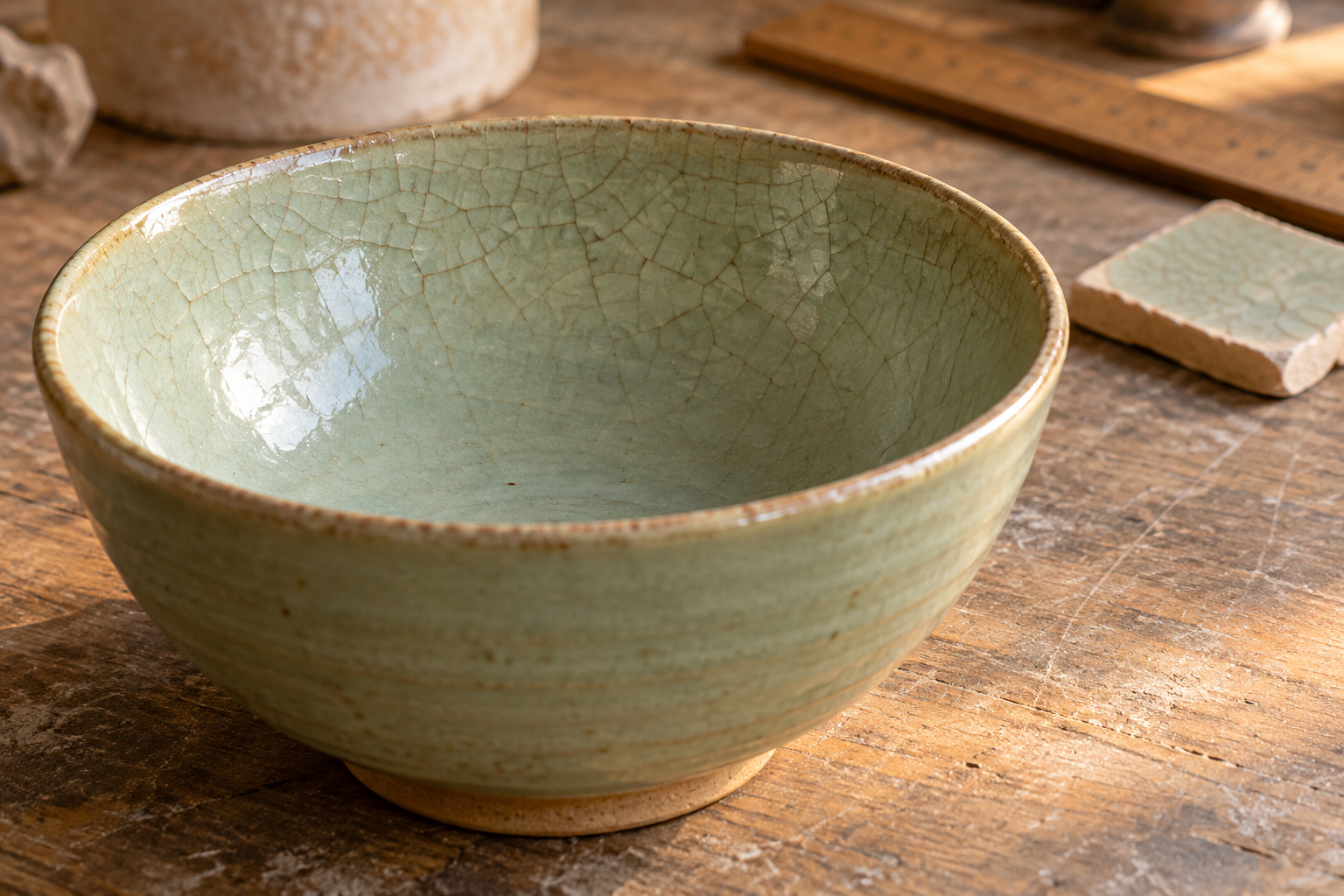
A fine crackle can appear days after firing because glaze and clay carry different strains. Cooling sets the initial fit; later moisture expansion can push a vulnerable surface into crazing.

About the author
I make small batches of functional pottery in a shared studio in Melbourne. Before taking up clay I worked in hospitality, where I learned how much a cup's handle, a bowl's weight and a stack of plates can affect an ordinary busy day. I still test new pieces by using them at home.
Clay at the Table follows studio work between dramatic milestones. I write about handles, surfaces, glazing notes, decisions made at the wheel and the variation that remains even in a carefully planned batch. I favor pottery that invites use, develops a history and does not have to be saved for a special occasion.
My studio notebook contains measurements, quick drawings and reminders to repeat an observation before trusting it. Outside the studio I enjoy cooking for friends, visiting small exhibitions and noticing the handmade objects that disappear pleasantly into the rhythm of a household.
A fine crackle can appear days after firing because glaze and clay carry different strains. Cooling sets the initial fit; later moisture expansion can push a vulnerable surface into crazing.
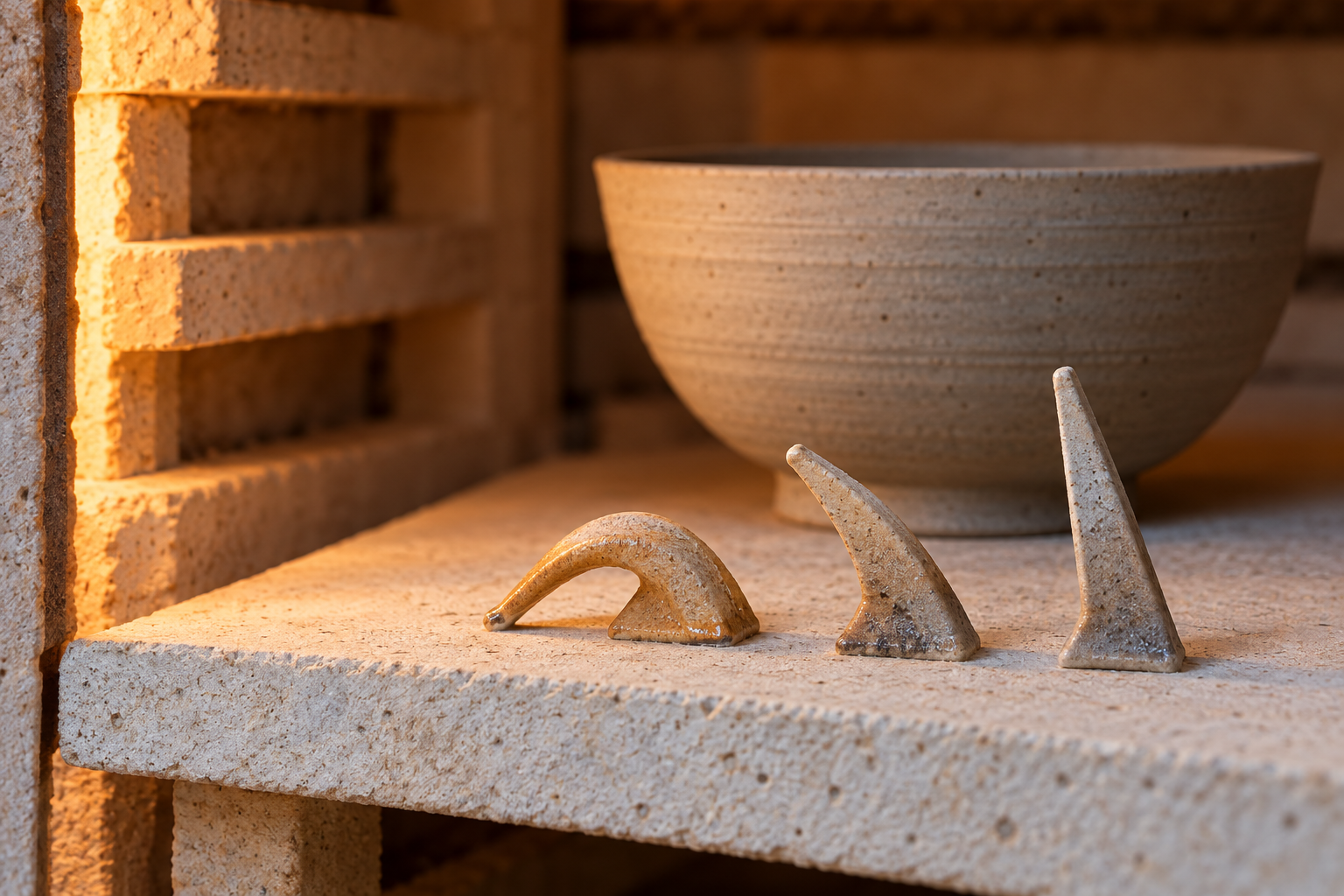
A witness cone preserves the heatwork received at its shelf, not a kiln's whole temperature history. Its bend can reveal a difference the controller misses, if you know how to read it.
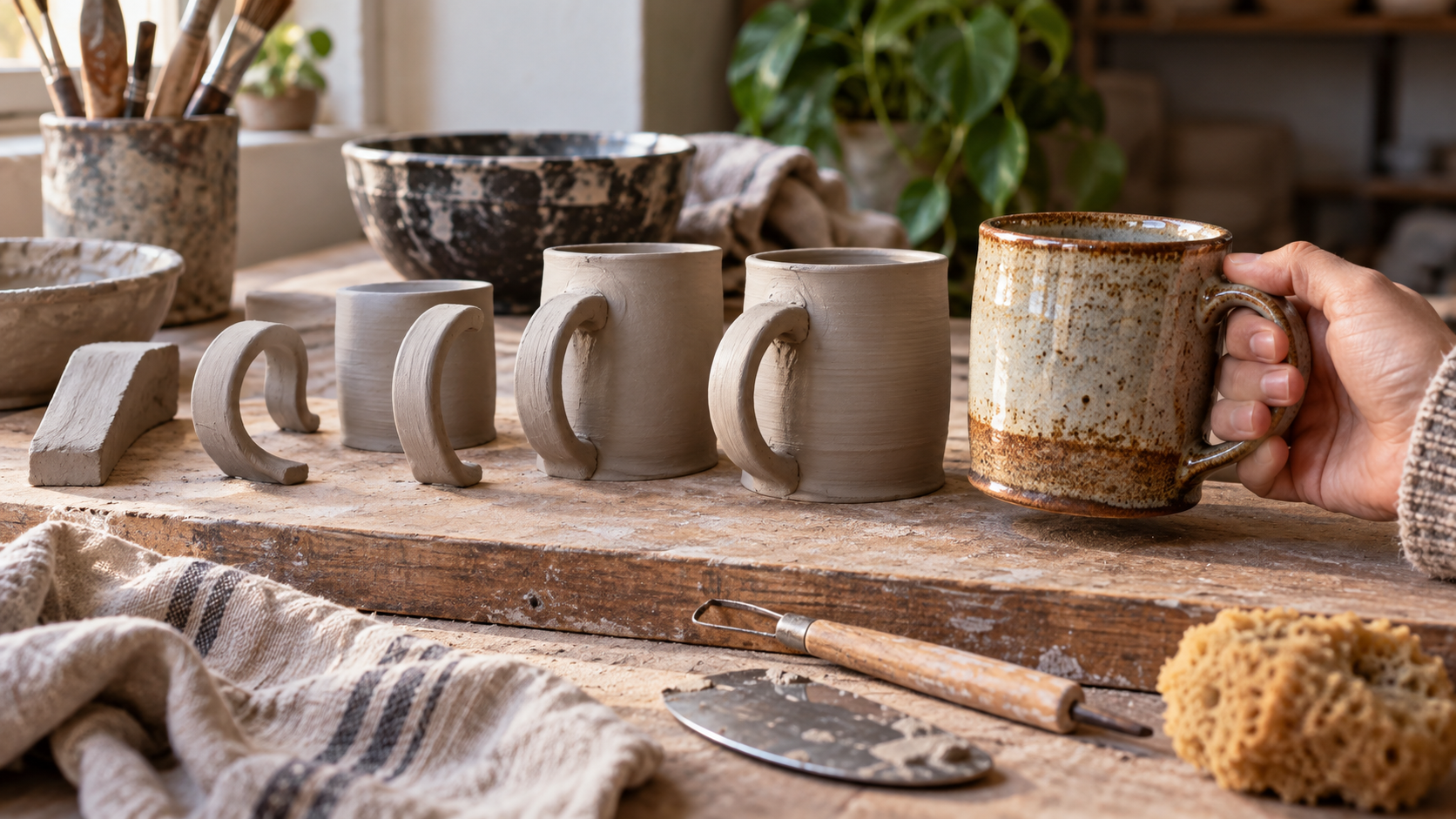
The mug looked excellent on a shelf. The glaze had broken pleasantly along the edge, the body had a gentle taper and the handle completed the silhouette. I made tea, picked it up and discovered
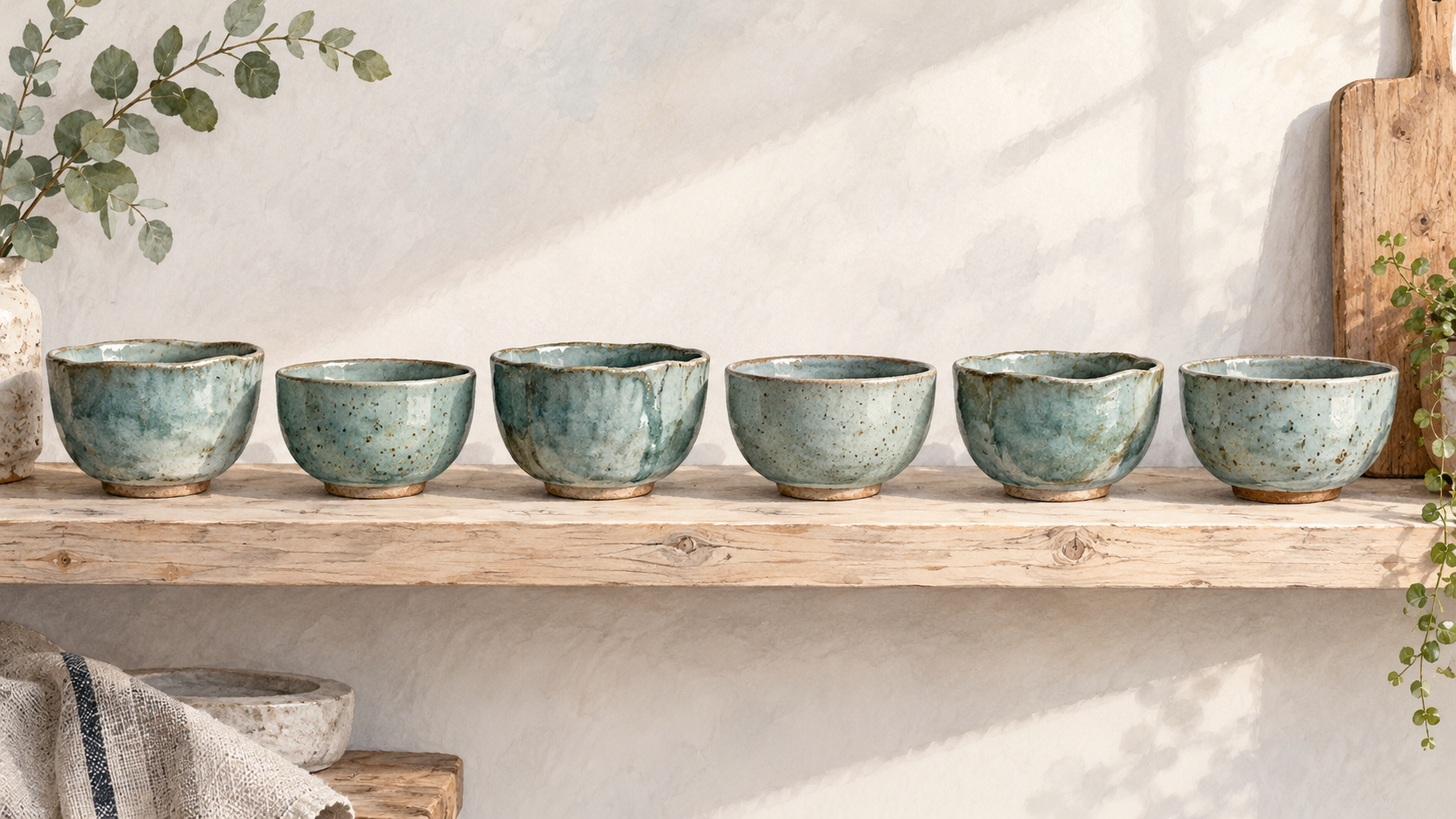
Six bowls came out of the same batch with six slightly different faces. One glaze looked deeper near the foot. Another rim carried a little more movement. A third bowl was the one I kept