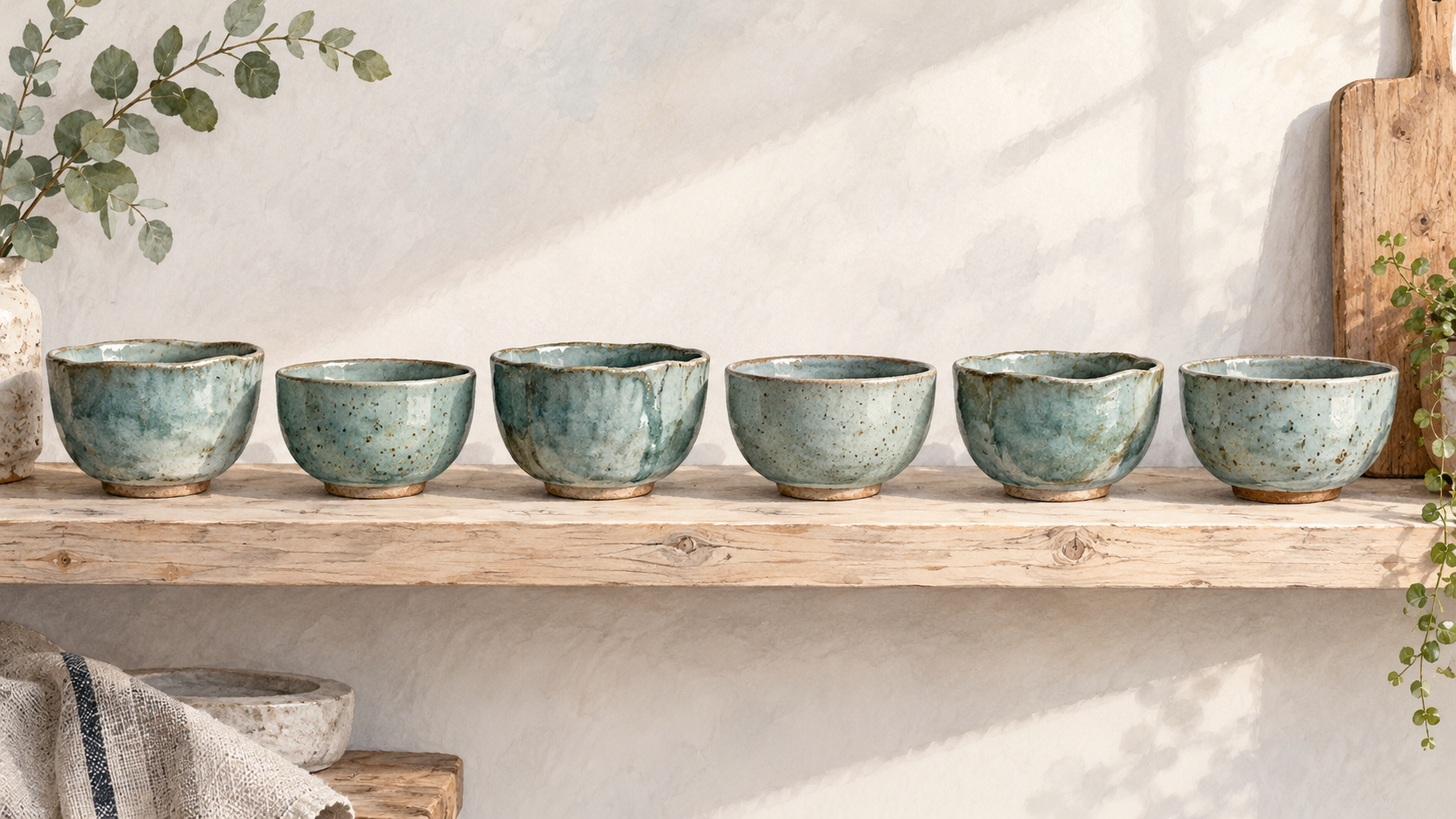
Six bowls came out of the same batch with six slightly different faces. One glaze looked deeper near the foot. Another rim carried a little more movement. A third bowl was the one I kept reaching for, though I could not have predicted that preference from the studio notes.
The variation was not a surprise. It was the first thing a visitor asked about.
Shouldn't they match?
They should belong together, if that is what I am making. They should be sound, useful and finished with care. Those ambitions leave room for differences that come from forming and firing individual objects. A family is allowed to contain more than one face.
This does not mean every flaw becomes charming when I call it handmade. I inspect the work and distinguish a useful variation from a problem. Romantic language is a poor substitute for looking carefully at the object.
The batch notes help. I record what I can about the process, compare the pieces and decide which differences I want to understand better. A variation may be welcome without being accidental in a way I refuse to examine.
At home, the bowls have developed different jobs. One gets breakfast. One seems right for a small salad. Another has become the favorite for a meal eaten on the sofa. Their relationship is visible, and their small differences make them easier to remember.
I could line them up and crop the photograph until the variation looked smaller. That would make a more uniform image and a less useful record.
They sit together on a shelf. Six bowls, one glaze, six ordinary invitations to eat something.
A thought worth keeping?