The mug looked excellent on a shelf. The glaze had broken pleasantly along the edge, the body had a gentle taper and the handle completed the silhouette. I made tea, picked it up and discovered that my fingers had been excluded from the design process.
This is an awkward realization for someone who used to carry cups through a busy café. I knew that a handle is an interface between a vessel, a hand and a small amount of daily distraction. Nevertheless, I had spent so long looking at the profile that I stopped checking the object in use.
A cup can be photographed without anyone holding it. That convenience makes a whole category of failure remarkably easy to hide from oneself.
Meet the hand halfway
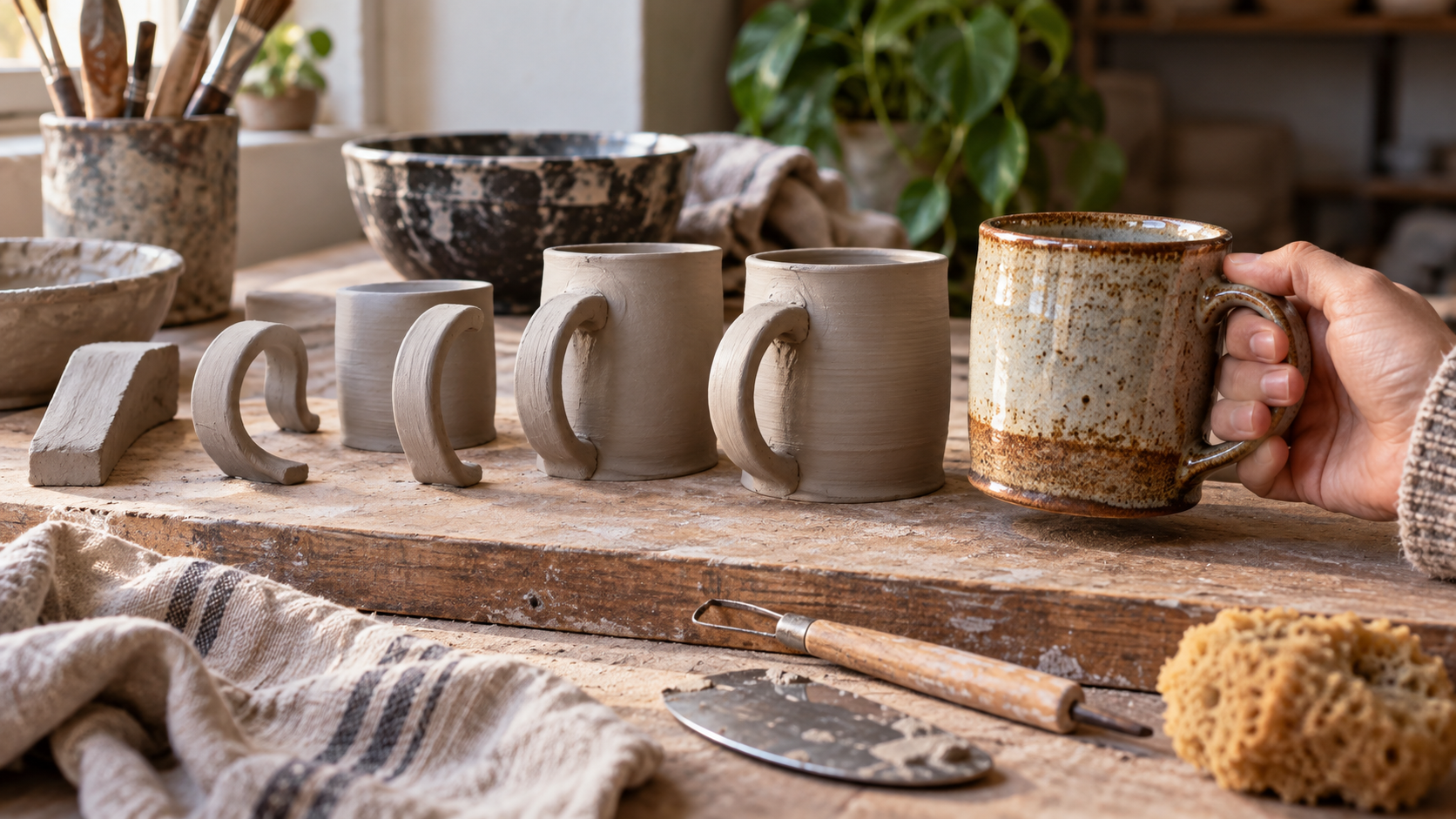
I began testing handle ideas earlier. Not every test needs a finished mug; an early model can help me ask better questions. Is there room for the fingers I expect to use? Does the angle feel natural? Does the vessel's weight encourage an awkward grip? Where does the thumb want to rest?
I also ask other people to hold a piece. My hand is not a standard unit. A comfortable grip for me may be cramped for someone else. I try to listen to what they describe before explaining the intention behind the shape. The intention cannot rescue a handle that gives its user an unpleasant morning.
There are tradeoffs. A more generous opening changes the profile. A handle with a strong visual line might feel too narrow. A thick section may suggest sturdiness while shifting weight in an unhelpful direction. These decisions deserve a series of observations instead of a single approving glance.
I record the shape with a quick drawing and words about the experience. Beautiful, awkward, balanced, finger presses here. The rough language keeps the test attached to use. Numbers can help me repeat a form, but I need the sensory note as well.
The table is another studio
A functional piece continues its examination after leaving the workbench. It meets a cupboard, a washing routine, the space beside a plate and someone who is not thinking about pottery while reaching for coffee. I take prototypes home because that ordinary context supplies questions a display shelf will not.
In hospitality, the difference between a convenient object and an inconvenient one can become apparent after handling it repeatedly. A piece may look reassuringly substantial and still be tiring in use. Another may seem modest but stack well, sit comfortably and disappear into the practical rhythm of a meal.
That disappearance is not a failure of artistry. I like knowing that an object I made can become familiar enough for someone to stop discussing it. The glaze remains there. The work remains there. The person gets to concentrate on breakfast.
I have kept the beautiful awkward mug as a studio reminder. It is not a secret disaster; it is a clear example of a question I asked too late. Its handle makes the next handle better because I can point to the difficulty instead of preserving only a flattering photograph.
When I make a new batch, I still care about the line from rim to foot. I still enjoy the moment when a surface catches light. I simply introduce a hand before allowing the silhouette to declare victory.
A mug does not live only at eye level. Eventually somebody picks it up, and their fingers have a perfectly reasonable expectation of being invited.

A thought worth keeping?